Featured Articles (Click on Image to Continue Reading)...

  • South Asian Arts welcomes submission of well-research academic articles from scholars. Papers should be typed in... [...]

  • Legacy of the rickshaw from 19th century exploitation, to late 20th century expression, to contemporary environmentalism...[...]

  • Monuments of the second phase of the Pallava rock-cut architecture are mostly concentrated in... [...]

  • ‘Organics,’ a group exhibition of works inspired by organic ideas that are distinctive of each artist... [...]

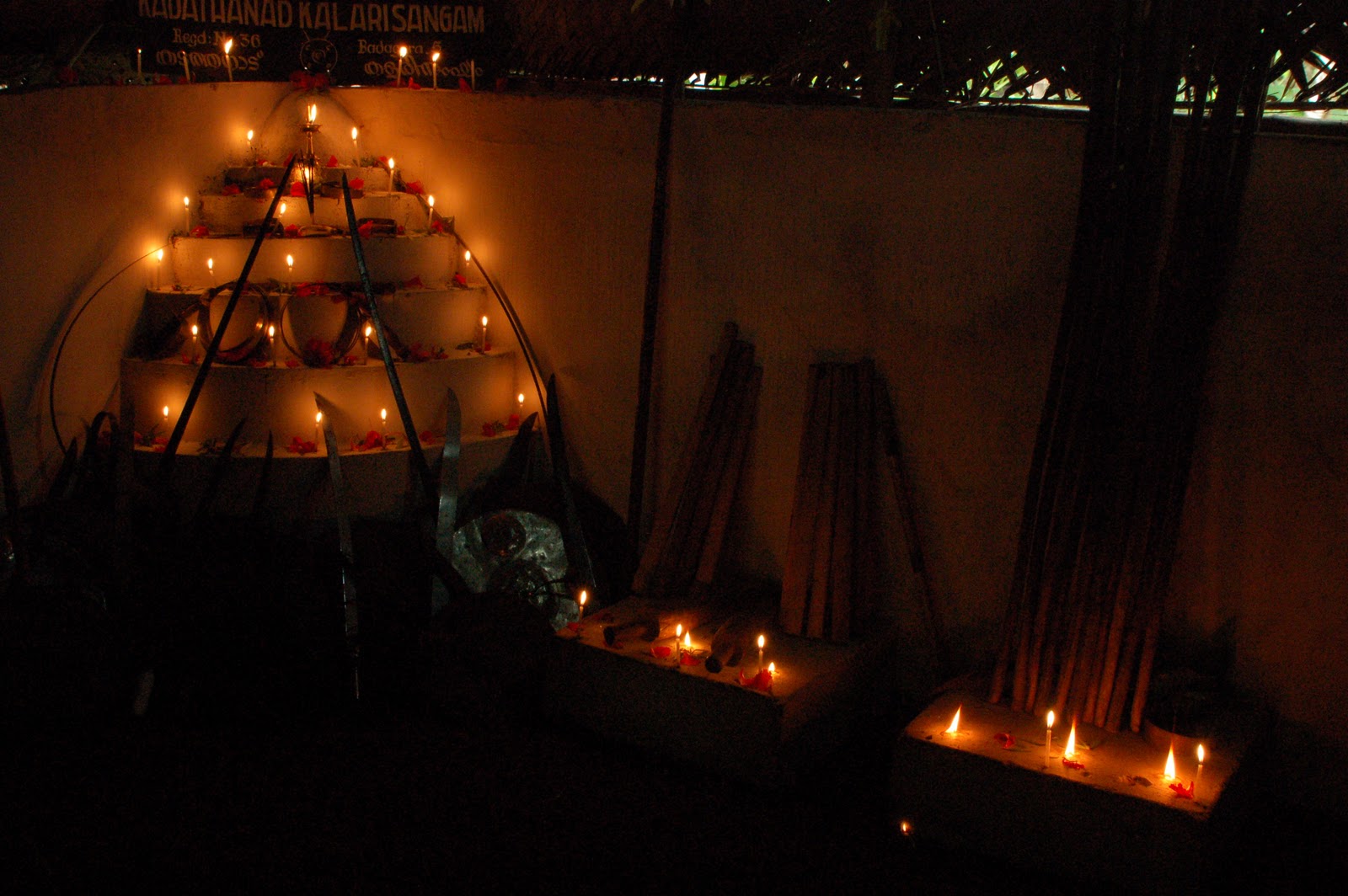
  • Kalarippayatt as an institution has a very long history from medieval to contemporary time...[...]

  • This online journal aims to bring to its readers various aspects of the art forms of South Asia... [...]

Showing posts with label Buddhism. Show all posts

A Brief Note On The Tsogyal Shedrub Dargyeling Nunnery In Exile

Friday, October 15, 2010


Dr M N Rajesh (Lecturer in History, University of Hyderabad) & Ms. Tsamchoe (Research Scholar, University of Hyderabad)


Votive Images Used for Ritual Worship (Photo - Ms. Tsamchoe)

Tibetan monasteries and nunneries are always portrayed as exotic with a sense of the other worldly But we see that there are large number of generalizations that generate this picture. Therefore this paper gives a general picture of the nunneries as the focus I always invariably on the monasteries. The conch shells, the bells, the books in the library of the nunneries and the nus are always the general subjects of presentation. However thy must be placed in context so as to have a general understanding of their role. This is therefore a general article accompanied by visuals and must be read as a lengthy caption for the accompanying photographs included in the paper.


The development of many monasteries in Tibet though modeled on the ancient Indian monasteries followed a different path of development. Similarly, the Tsogyal Shedrup Dargyeling Nunnery is modeled on the palyul tradition which is the mother monastery in Tibet. The decline of old Tibet and the conditions of exile have created a different set of socio-economic contexts. The present nunnery is now following the ritual tradition of Palyul tradition faithfully but the structure of the society and the laity has also led to certain influences... 
Download PDF

Read more...

Dambulla Cave Temple, Sri Lanka

Tuesday, July 13, 2010

Dambulla Cave Temple, Sri Lanka

Archana Verma
Dambulla Cave Temple, Photo - Juergen Schreiber 

Dambulla is located 148 kms east of Colombo in Sri Lanka and a World Heritage Site. Apart from its well-preserved state, it reflects an important stage in the development of Buddhism, when even before the development of Mahayana, Buddha images had begun to be combined with the Stupa, which was the main cultic object at this time. Such evidences are found from other South Asian sites as well. Ajanta, Bagh, and the Gandhara region are some striking examples of this. Dambulla is more or less coeval with the sites in Afghanistan, which had begun to influences of divinisation of the Buddha even before the beginning of the Common Era.  


Not only is the Buddha image combined with the Stupa here, but there are more than a hundred Buddha images painted in and around the caves. Besides, there is a huge image of the Buddha in the Mahaparinirvana pose. There are also Buddha images in the niches, obviously meant for veneration.


Looking at these images, it is obvious that Dambulla had come a long way from the Theravada which was normally prevalent in Sri Lanka. Considering that this site is datable to the 3rd-2nd centuries BCE, it is even more remarkable that it should have accommodated the image worship prevalent in the North West and Central and Western parts of India.

In the latter part of its existence, it even accommodated other concepts such as the divinisation of kings and inclusion of Hindu gods within its pantheons. These phases are much later at this site.

Thus, Dambulla presents an interesting archaeological site, where man diverse phases of developments in Buddhism can be studied together in one place. There is a need to study this site more deeply. 

Read more...

Visitors to this Journal...

Organisational Membership -

Association for Asian Studies, Ann Arbor, Michigan, USA

Followers

This Journal on Facebook

This Journal on Linkedin

South Asian Arts - A Journal of Cultural Expressions in South Asia on LinkedIn

  © Blogger templates Newspaper by Ourblogtemplates.com 2008

Back to TOP