Featured Articles (Click on Image to Continue Reading)...

  • South Asian Arts welcomes submission of well-research academic articles from scholars. Papers should be typed in... [...]

  • Legacy of the rickshaw from 19th century exploitation, to late 20th century expression, to contemporary environmentalism...[...]

  • Monuments of the second phase of the Pallava rock-cut architecture are mostly concentrated in... [...]

  • ‘Organics,’ a group exhibition of works inspired by organic ideas that are distinctive of each artist... [...]

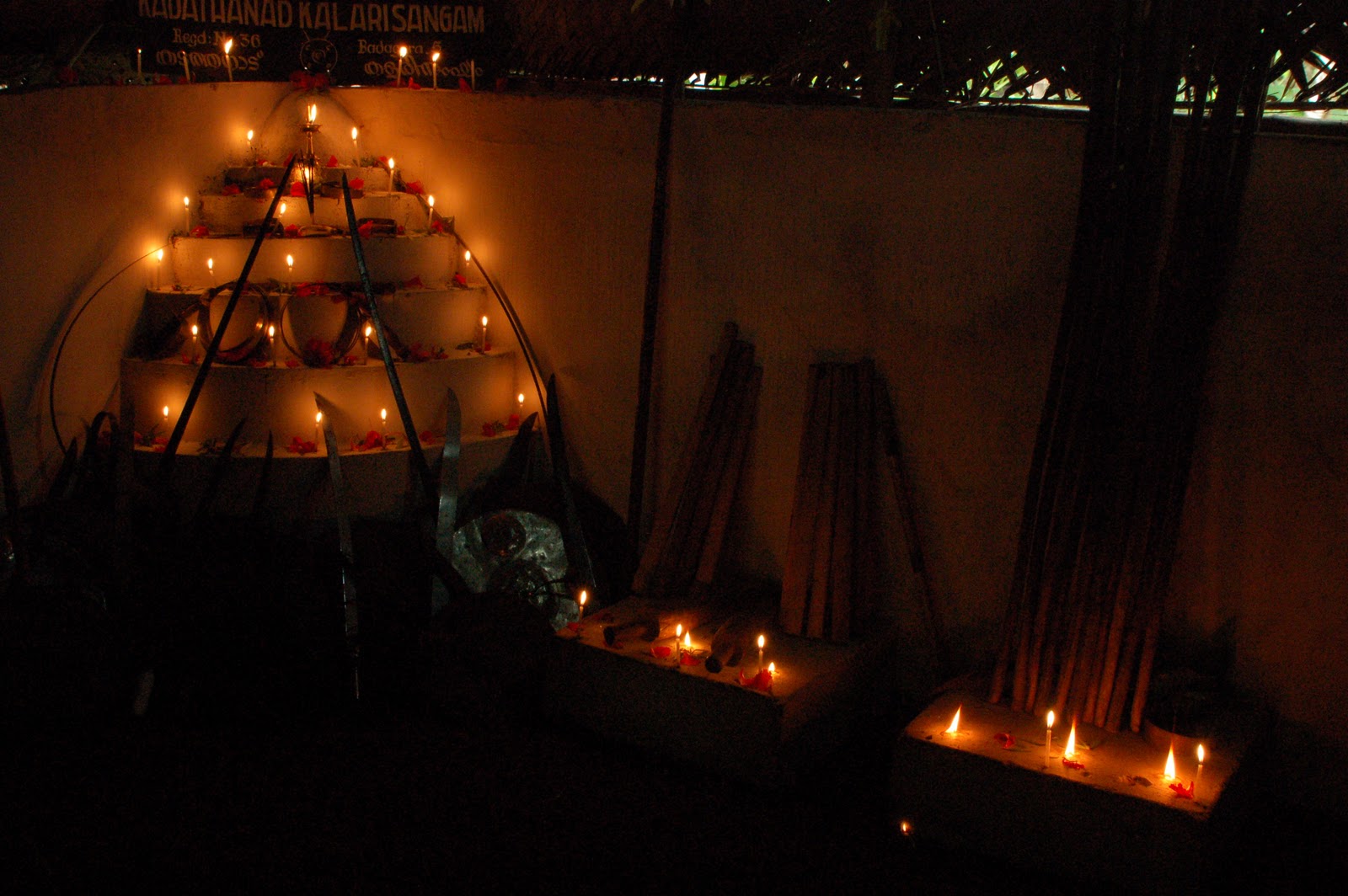
  • Kalarippayatt as an institution has a very long history from medieval to contemporary time...[...]

  • This online journal aims to bring to its readers various aspects of the art forms of South Asia... [...]

Showing posts with label South Asian Culture. Show all posts

Articles in the Jan 2011 issue and Back Issues in 2010 Volume...

Friday, January 14, 2011

ISSN 0976 – 7266 
Contact - Archana@southasianarts.org 
See details of each issue and abstracts of each PDF issue


The Goddess, Ellora (Photo - Archana Verma)


South Asian Arts aims to brings to its readers scholarly articles related to all aspects of art and cultural expressions of South Asia. Some of these articles are available in full access on this website.


Complete details of each issue of South Asian Arts, with abstracts and PDF files are available on this website. Do explore it to get an idea of what we have in store for those interested in South Asian Arts.

A complete list of articles in all its volumes published so far is given below. Please feel free to click on the links and explore them.

Archana Verma

Content for (2) January 2011 
Artistic Activity in Nepal as World Peace - Artist Profile  (Full access online and PDF available)


Lung-Ta Collaborative - Living Blessings of Lo by Maureen Drdak   (Full access online and PDF available)
Selected Hindu Temples of Bangladesh - Book Review by Archana Verma   Full access online


Content for (1) October 2010

Kolshi In Bangladeshi Modern Art  by Lisa Banu

Brief Note on Tsogyal Shedrub Dargyeling Nunnery in Exile by M. N. Rajesh and Tsamchoe

Conserving Living Religious Heritage - Maintaining Continuity and Embracing Change by Ioannis Paolios (Full access online)

Story of India by Michael Wood - A Review by Archana Verma (Full access online)

Threat to Afghan Heritage by Archana Verma (Full access online)

A Bastion of South Asian Art and Culture in Philadelphia by Zoe Papademetriou (Full access online)


(1) July 2010 Issue
Performing Pasts - A Review by Archana Verma (Full access online)
Dambulla Cave Temple, Sri Lanka by Archana Verma (Full access online)
Decaying Paintingts at Rachol Seminary, Goa by Archana Verma Full access online)
Lajja Gauri Type Figures in the Indus Valley by Max le Martin (Full access online)

(1) April 2010 Issue

Islamic Art and Funerary Practices by Archana Verma and Mazhar Hussain
Religious and Cultural Interaction in Mughal India by Archana Verma (Full access online)
Method of an Architect - Book Review by Archana Verma (Full access online)

Read more...

Michael Wood's Story of India - A Review

Friday, October 15, 2010

Documentary and Book Review
Archana Verma


Michael Wood's Story of India, a ten thousand years of history in the form of a six-parts documentary and book, made for the BBC and the PBS is quite well-known by now.  The appreciation it has gained in presenting the history of India - or more accurately, the South Asian subcontinent - is well deserved. Michael Wood takes a very sympathetic and sensitive approach to this presentation which makes his narrative delightful. He has taken the pains to get his chronology of these thousands of years right - something even many Indian scholars are often not able to achieve. He has also correctly understood the major political, economic and cultural events of this long history and presented this complex narrative in an extremely comprehensible manner - something even many historians are not able to achieve sometimes. The photography and the narration techniques are excellent.  


In all, I would call this the best documentary on the history of India for the uninitiated, especially the foreign students who want to embark on the journey of studying this complex narrative without having any prior knowledge of the subcontinent. I would suggest that they should watch this documentary first,  read the book, explore the PBS website and then enrol for a course on South Asian his tory in their university. More, this documentary has something even for those who are already familiar with the history if India, since it covers an amazing range of well-researched, cogently presented information.


The PBS website has presented this endeavour in such a skilful manner, that the value of the documentary and the book is greatly enhanced by the way these are presented on the PBS website. On this site, one can find the overview of each episode of the documentary, with a perfect timeline, main events and features highlighted and discussed separately, an interactive photo gallery, a very accurate map of India and short video clips explaining the intricacies of religion, culture, metallurgy, boat-making, political history, economic activities, trade, military conquests and much more, each in a matter of a few minutes in simple language which even a high school students can understand. Besides, there are resources for teachers, lesson plans and questions for discussions for students.

Care has been taken to include stories from the people - indians living in India, in foreign countries, foreigners who have visited India and those who read about India.  These accounts from the people are diverse, just as India. They present a slice of different aspects of Indian life and culture. After each show, people were also allowed to ask questions from Michael Wood. All of them are not appreciative. Some are very critical and Michael Wood has handled them dexterously. Thus, this endeavour has taken care to include different aspects of handling this daunting task of explaining this complex narrative in six episodes in a simple format. Considering the monumentality of the task, they have been very successful.


A criticism which a scholar of Indian history may offer in this regard is that this presentation is too positive in its portrayal of Indian history. It talks about achievements, strengths, riches, heights of success, the pleasant aspects of Indian history, but not about its weaknesses, negative aspects, failures and vices. No civilisation, however great, can be without vices and India is no exeption. It's true that it has been rvaged by centuries of colonialism, but it is also true that there have been moments in Indian history when the Indian people were not able to overcame their weaknesses. For example, like any other society in the world, Indian society has always been a hierarchical one. When the European powers began to establish their colonies in India, the indian rulers were not able to understand their machinations. This was also the reason colonialism came stay in india for centuries. Indians were not able to fight the communal forces and cement their fault lines which brought the partition, when the British attempted to divided India. These are some of the failings not highlighted on the PBS website. It is also intriguing that in its presentation of the array of religions in india, Judaism is mentioned, but not Christianity, which has existed in india almost since immediately after it was born in the 1st century CE.

But it can be counter-argued that if an over emphasis had been placed on the negative aspects of Indian history, the makers of this documentary would have been charged by Indians of having a derogatory, imperialistic, ethnocentric attitude. Considering the context of the makers of this documentary, it has achieved just the right balance in presenting this complex story.


As said above, this should be a required reading, exploring and viewing resource for the foreign students wishing to study Indian history.


Read more...

Visitors to this Journal...

Organisational Membership -

Association for Asian Studies, Ann Arbor, Michigan, USA

Followers

This Journal on Facebook

This Journal on Linkedin

South Asian Arts - A Journal of Cultural Expressions in South Asia on LinkedIn

  © Blogger templates Newspaper by Ourblogtemplates.com 2008

Back to TOP